The Servant Leader is a Bearer of Hope
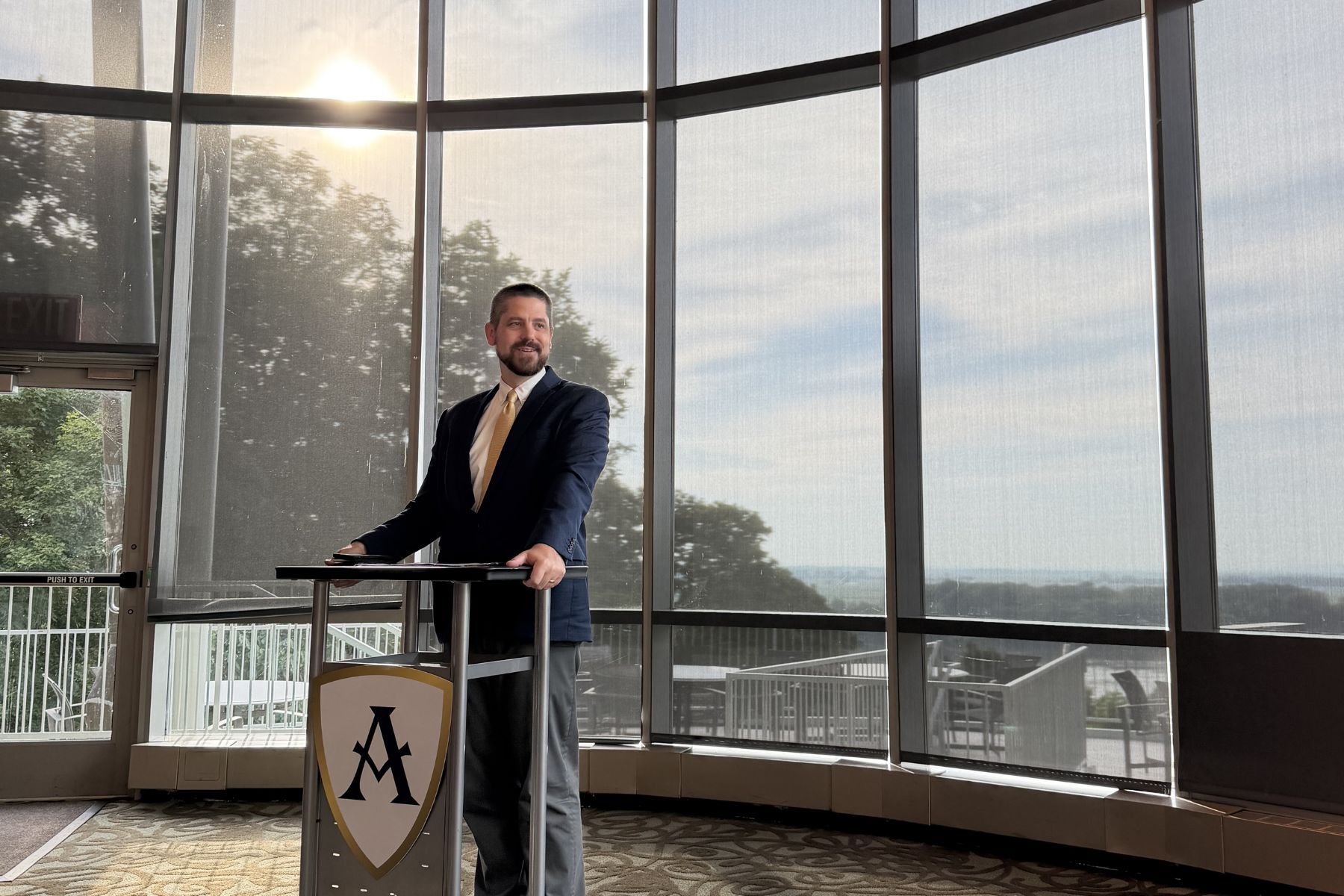
Dr. Sean Innerst was recently asked to give a short devotional on the topic of servant leadership to members of Thrivent Financial Services who met on our campus in Florissant, MO. Here is the text:
One of the central characteristics of human persons is that we all tend to think of our lives as a story. Who our parents are, where we’ve been raised, the things we have learned to do to provide for ourselves, all these things are conceived in accord with a story line, one thing leading to the next and all of them adding up to my present location in time, along with all that means about our possible futures. We each think of ourselves in terms of a beginning, a middle and an end.
Our social media timelines are the same; they, too, encourage us to think of ourselves as in the midst of a story that (we hope) is leading us somewhere. One facet of modern life, however, is that we tend to think of ourselves as the sole author of our individual stories, that we have “author’s rights”or a “copyright” on our stories.
Despite this human tendency to put ourselves in story-form, we are also subject to other tremendously powerful forces today that wrestle with us for sole authorship. The daily news cycle encourages us to see much of our lives as entirely out of our control. We are constantly told that we are under threat from many sources, that the world is in fact teetering on the precipice and if the present crisis doesn’t get us, certainly tomorrow’s crisis will.
So, we find ourselves whipsawed back and forth between the immense responsibility of being the sole author of our stories—and so solely worthy of praise or blame if we turn out to be a hero or a villain—and the other extreme view that we are mere pawns in a game of chess being played above our heads.
This is our modern predicament: we are either radically autonomous and subject to no one, or we are helpless cogs in, even victims of a machine whose operators are nameless and faceless “powers” beyond our control.
There is an alternate view, however. Christianity rejects both of these two visions which war for control of our modern self-understanding. Its view is this: there are givens in our lives, things we can’t control. Our genetic makeup, our immediate social and cultural circumstances are decided for us; these are givens, whether they be favorable and so thought of as gifts, or unfavorable and so considered to be challenges.
Much is decided for us. God chooses when we are to come upon the scene of the world-story. He gives us to our family, place and time. But God has also made us free, able to contribute to the story that our lives will become. We are not mere pawns, nor are we entirely the masters of our own fate. We live in the midst of a struggle that involves the goodness of our nature, the fallenness of that same nature, our aspirations and our short comings.
But all of the countervailing forces in our lives, both the givens—the things we can’t control—and the possibilities afforded by our wits and our freedom, are—and this is the central point—directed and purposeful, guided by Love. That is, God’s Providence, what the Catechism of the Catholic Church calls “a plan of shear goodness,” is directing the course, the story of our lives. Put simply, our story is a love story. God has not left us alone to bear the full weight of our own authorship. He is the supreme Author of all our stories, and He permits us, in fact, asks us to place our hand upon the pen with His as He writes it.
This is our real story. God is sovereign and mighty and so capable of giving us a final chapter to our story that is beyond our natural powers and our fondest imaginings, but He has also given us the responsibility to choose whether we arrive at that marvelous final chapter or not; much of the plot line is left to us. All that we can’t do, He has taken care of, so we need not worry, but all that we are capable of doing, we must choose to do. On this turns the final work, whether it ends in romance or ruin. But God is always there, always ready to turn tragedy into triumph. God is Provident, and directs us by His love, that is what we need to know and that is what those we are called to lead to know.
The most pressing task of Servant Leaders in our day is to reconstruct a vision of God’s Providence for those we lead, to help them see that chaos is not the plot line of their stories, that real personal agency is called for – essential, in fact, for their success - but within the wider context of the givens of human life: both blessings and challenges.
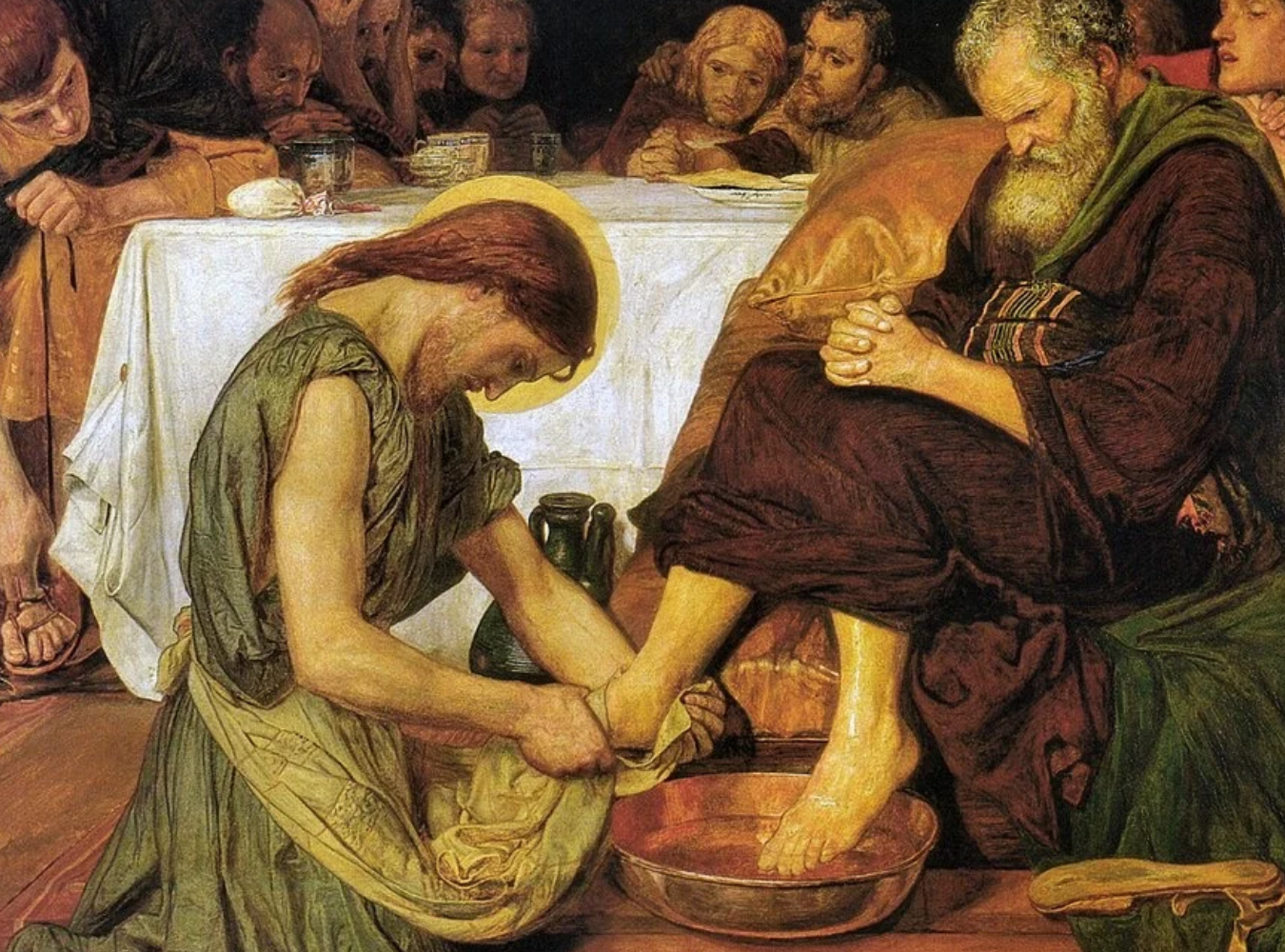
Victory in faith, family, and even finance, is possible, but the story we have been told, moves always from Passion and death to Resurrection, from sin to salvation. Jesus Himself fell three times, (not in sin, as we do) but under the weight of the Cross, on the path to our Redemption. We too will fall, but by the perfect merit of His struggle, we can be assured that His grace will be there when we do. That grace is our ultimate promise of final victory if we but live our stories, “co-author” our stories, in accord with the plot line that He has written for us.
St. Augustine of Hippo—the person for whom this place is named—once said, “if the Providence of God does not preside over human affairs, there is no point in busying oneself about religion.”That is, if God is not intimately involved with human history, and with our own stories, guiding them carefully for His purposes, then we are still in the dark about who He is and His plan of love for us, about what it even means to be human. He didn’t mean that if we can show that there isn’t a plan to history that we don’t need religion, which is what the world around us is so energetically trying to get us to believe. Augustine meant that if God isn’t provident, if there is no world-story, there is no point to busying ourselves about anything!
It is our conviction in faith that God who transcends all things is also immanent in the world, omnipresent and omnipotent, constantly upholding everything—including ourselves—in existence from moment to moment. He is not the hidden God who just watches from a distance, He is—again, as Augustine described—more inner to us than our inmost selves and higher than our highest selves. He is constantly attending to our every thought and feeling and acting upon us by His grace. If He is not, we are not. As the Catechism puts it, “without the Creator the creature vanishes.”
This is the truth about God and history given us both by reason and our faith. Our current culture is avid about depriving us of this confidence in the Provident God, the God who hears our cries and sends His grace.
All this is to say that Servant Leadership is largely about providing hope, hope in the divine Providence, God’s presence, care and direction, and in so doing providing a cure to the modern malady of meaninglessness, aimlessness and apathy.
If there ultimately is no goal for human life, then leadership itself is a mirage. To lead is to recognize that there is a goal worth our striving and to direct others to achieve it. To put it directly, if there is no God, there is no goal; because if there is no God there is no world and no world-story. If we commit ourselves to serve the Cause of the world, the goal that God has for it, then we will be fit to lead, otherwise we and they, those we may claim to lead, will only wander in a wilderness of our own making, a story with no plot, which is, in fact, no story at all.
What this means is that our tendency to put our lives in story-form with a beginning, middle and end, is itself a tacit testimony to the existence of God and to a rudimentary belief that history isn’t "just one damned thing after another,” that events are leading somewhere and not just nowhere in particular. In the end, there really are no atheists in the foxhole of this world-battle that we are engaged in. The only question is whether the story that we all already admit to being underway will be a tragedy or a triumph, and for that we are left to choose.