Educating for Reality: A Reflection on the Front Royal Statement
"It is the normal mind’s first reaction to the world—to know that it exists. Before he reflects…a man first simply looks, smells, tastes, touches, and affirms existence."1 So wrote John Senior, one of the minds behind the now legendary Integrated Humanities Program (IHP) at the University of Kansas in the 1970s. This program rooted itself in the Perennial Philosophy, confident that human beings are able to “reflect on their common experience of a reality independent of the mind and arrive at certain true judgments about it that constitute knowledge.”2 As Senior would more succinctly put it, the Perennial Philosophy took as two self-evident principles:
1. “The real is really real.”
2. “Truth follows upon the existence of things.”
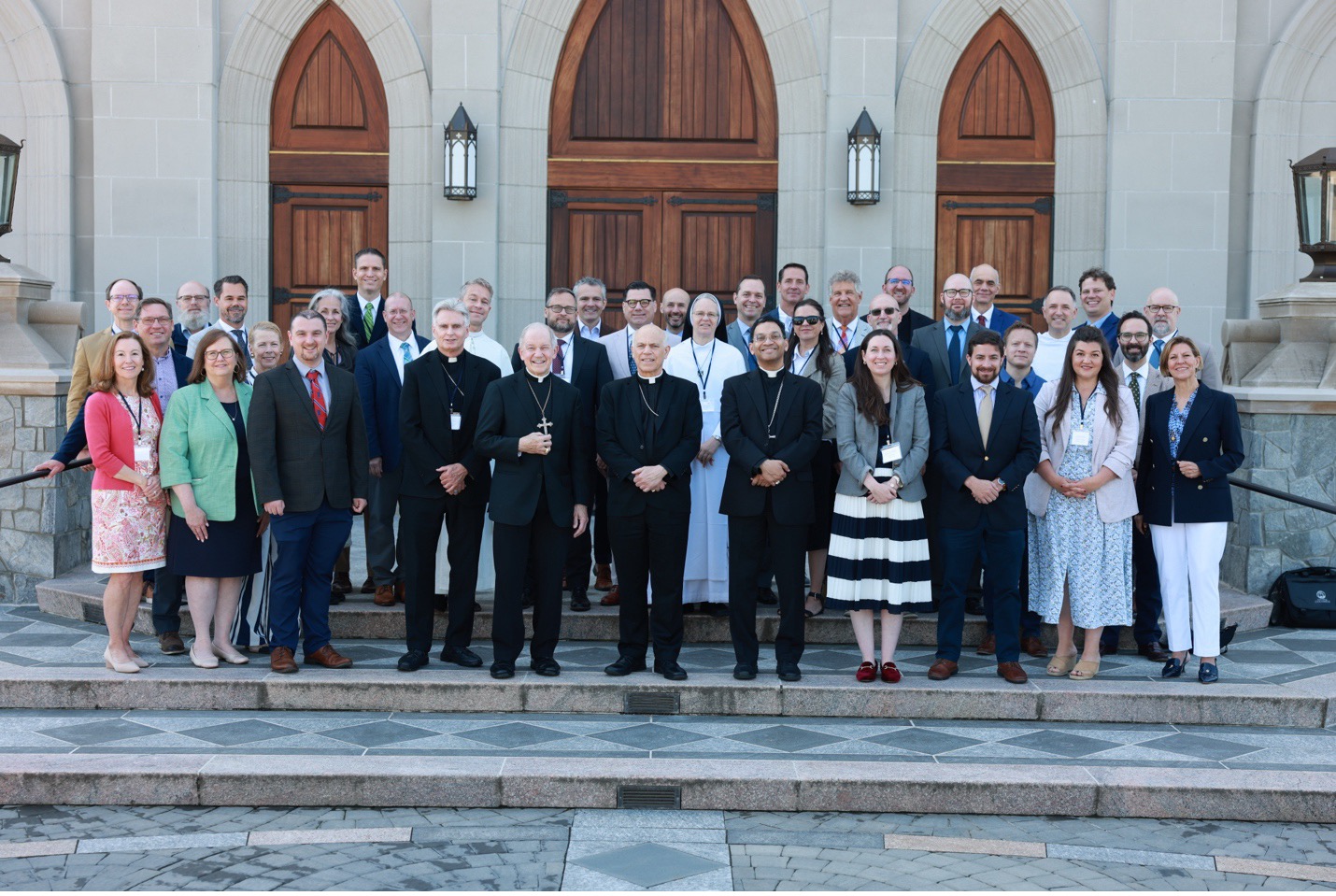
Senior’s insistence on the priority of reality in education immediately came to mind when I first read The Front Royal Statement. Drafted by a group of leaders in the renewal of Catholic education who met at Christendom College near the end of May, the statement outlines seven principles meant to “provide a shared foundation to unify the various streams of educational renewal now underway.” The vision of education outlined in the Front Royal Statement resonates with the two principles articulated by Senior. Indeed, for the signatories of the statement, “the aim of Catholic education is not merely to communicate facts but reality itself.” I find this insistence on education as the communication of reality particularly apropos and worthy of sustained attention. While mention of wisdom and virtue, as well as the triad of truth, goodness, and beauty, are rather frequent when speaking with teachers and administrators involved in the renewal of Catholic education, we would do well also to give due attention to speaking more explicitly about the ways in which such an education is a formation in reality.
A noteworthy connection between John Senior and Front Royal is found in Bishop James Conley, himself a graduate of the IHP and one of the signatories of the recent statement on Catholic education. He provided the foreword to the republication of Robert Carlson’s account of the rise and fall of the IHP, Truth on Trial. Bishop Conley’s diagnosis of the present moment is instructive: “We live in the age of the image; of the virtual and the synthetic.… To be sure, technology can help us to do great things, but there is a kind of unreality about our time when we are too immersed in its virtual reality.… In a virtual age, Catholic education must offer real experiences with real things.”3
How will a Catholic education offer “real experiences with real things”? Consider the following examples from the Front Royal Statement (emphasis mine):
· “Through a process of ‘awakening,’ education constitutes a deep encounter with and conversion to reality, especially with the mystery of redemption.”
· “We are endowed with reason and freedom, capable of knowing truth and loving God with all our heart, soul, strength, and mind. This reflects the full reality of our human nature: bodily, emotional, intellectual, volitional, and spiritual.”
· “At [the curriculum’s] core are the liberal arts, especially grammar, logic, and rhetoric, which cultivate the powers of the intellect and conform the student’s mind to reality itself.”
· “This formation… values both faith and reason. It springs from a sacramental imagination, a faith which enables one to perceive how physical reality reveals the transcendent, spiritual reality lying beyond it, while remaining firmly grounded in a robust realism which affirms the intelligibility, goodness, and intrinsic value of created reality.”
A Catholic education will nurture a spirit of contemplation in students, that they might lovingly look, smell, taste, touch, and affirm existence. Catholic education should make realists of our students, who will not look upon the world as a mere “desert of the real,”4 but rather as “charged with the grandeur of God.”5 We should be cultivating a sensitivity to all things visible and invisible.6 As Pope Benedict XVI compellingly put it, “The word of God makes us change our concept of realism: the realist is the one who recognizes in the word of God the foundation of all things.”7
I commend the authors of the Front Royal Statement for their insistence that education constitutes a “conversion to reality.” May the seven principles it outlines fall upon the ears of many who will hear and accept them, that their efforts might bear fruit, thirtyfold and sixtyfold and a hundredfold. Would that every student who passes through Catholic schools might find in the Word of God the foundation of all reality, and in turn make this prayer of St. Augustine their own:
“But I give thanks to you, my sweetness, my honor, my confidence;
to you, my God, I give thanks for your gifts.
Do you preserve them for me.
So will you preserve me too,
and what you have given me will grow and reach perfection,
and I will be with you; because this too is your gift to me
—that I exist.”8
Learn more about studying Catholic Education at the Augustine Institute Graduate School of Theology.