

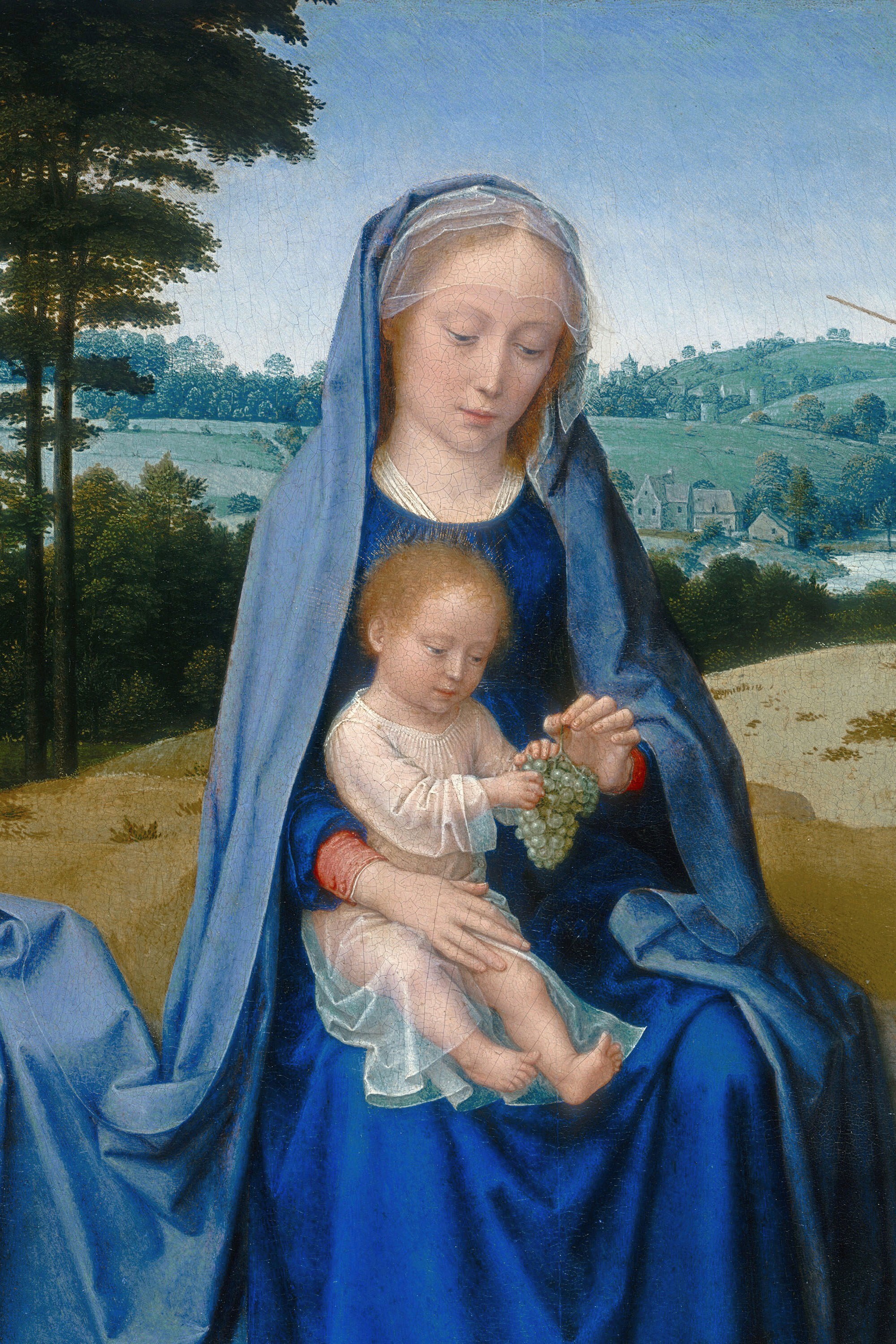
“Mary is the image of the Church in attentive hearing of the word of God” (Verbum Domini, 27). The suggestion was Pope Benedict XVI’s, but it was in keeping with the Church’s tradition of thinking about the Mother of God.
In St. Luke’s Gospel, after the adoration of the infant Jesus by the shepherds, we read that “Mary kept all these things, pondering them in her heart” (Luke 2:19). It is the evangelist’s choice of “pondering” that underscores Our Lady’s attentiveness. St. Jerome rendered St. Luke’s word as conferens, which preserved the sense of the Greek term, which means conversing or meeting.
Several centuries later, St. Bede the Venerable expanded upon that active sense of listening in his gloss on the passage: “Whether they were things that she understood or things that she could not yet understand, the Virgin stored them all up in her heart to be ruminated upon and diligently examined, whence it follows that ‘his mother kept all these words, pondering them in her heart’” (quoted in Catena Aurea, Luke 2, lectio 14). In St. Bede’s monastic vocabulary, ‘to ruminate’ was a synonym for ‘to contemplate with sustained attention.’
St. Bede also said that Our Lady “diligently examined” the mysteries of God. In the nineteenth century, St. John Henry Newman made a similar observation:
St. Mary is our pattern of Faith, both in the reception and in the study of Divine Truth. She does not think it enough to accept, she dwells upon it; not enough to possess, she uses it; not enough to assent, she develops it; not enough to submit the Reason, she reasons upon it (“The Theory of Developments in Religious Doctrine”).
Newman was not interpreting Luke 2, so he may be forgiven for drawing together a number of episodes from the life of Our Lady as the basis for his comprehensive judgment. Arguably, it is her speech to the servants at Cana – “Do whatever he tells you” – that shows best how she “used” or “developed” what had been revealed to her about her Divine Son. And it was in her Magnificat, as Benedict XVI eloquently said, that we, “see how completely at home Mary is with the Word of God . . . She speaks and thinks with the Word of God; the Word of God becomes her word, and her word issues from the Word of God” (Deus caritas est, 41).
It is just such a reception of the Word of God – contemplative and fruitful for the life of charity – that the Augustine Institute’s Verbum Domini Seminars for Priests are meant to encourage.
Beginning in June 2026, each seminar will include eight days of study with the faculty of the Augustine Institute Graduate School of Theology, with morning classes on one of the Gospels and afternoon classes on one of the Doctors of the Church. The primary purpose of the seminars is to provide spiritual and intellectual refreshment for Catholic priests. Yet they will also be a setting in which the pastoral needs of the People of God can be discussed with a special emphasis on the ministry of preaching.
For more information about the seminars and to apply, please visit the Verbum Domini Seminars page.


