Newman, Education, and Discipleship
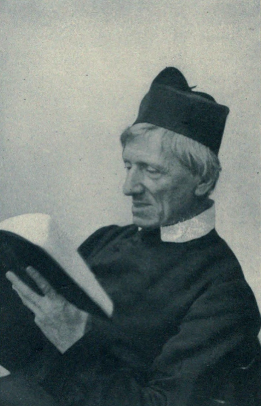
It is a privilege and a joy for me to be able to offer a graduate seminar this semester on the newest Doctor of the Church, St. John Henry Newman. There are plenty of good reasons to read (and to re-read) Newman’s works. It seems appropriate this year, however, to attend to those features of his ministry that caused him to be named co-patron of Catholic education. In our seminar, we are especially interested in Newman’s conception of discipleship and how it related to his convictions about liberal or classical education.
There is a sense in which Newman was a teacher throughout his life, but at certain times his work with students was more intense. The first of these was the period 1826 to 1829, when he was one of the tutors of Oriel College, Oxford. At the time, Oxford was functioning primarily as a seminary for the Church of England. The majority of the young men who took degrees went on for ordination, just as Newman himself had done. The University had long been divided up into residential colleges, where most of the instruction took place and did so in the form of tutorials. As a tutor, Newman had a relatively small number of students in his charge, two or three dozen at a time, and he worked with them in still smaller groups, according to their place in the program of studies. The reading was chiefly in classical texts—studied in the original languages—and in mathematics. But the whole education unfolded within the context of the liturgical life framed by the Anglican Book of Common Prayer.
Among the eighteen or so colleges at Oxford in those days, Oriel was known for the seriousness of its intellectual pursuits. In Newman, however, the College had a “Fellow” or faculty member who was as earnest about holiness as he was about truth. From his diary entry of February 21, 1826, we learn of the young saint’s high ideal:
And now, O Lord, I am entering with the new year into a fresh course of duties, the tutorship. May I engage in them in the strength of Christ, remembering that I am a minister of God, and have a commission to preach the Gospel remembering the worth of souls, and that I shall have to answer for the opportunities given me of benefitting those who are under my care.
The Lord blessed his good intention. From the students Newman tutored during those years came some of the key figures in the Oxford Movement, a movement of renewal within the Church of England that led to Newman’s conversion to the Roman Catholic Church, and, within ten years of his reception in 1845, the conversion of several hundred other Anglican clergy and laity.
Newman’s conviction that liberal education and the pursuit of holiness belonged together never wavered. In 1856, when as a Catholic priest he was the rector of the fledging Catholic University of Ireland, he restated that conviction in stirring terms:
I want the same roof to contain both the intellectual and moral discipline. Devotion is not a sort of finish given to the sciences; nor is science a sort of feather in the cap, if I may so express myself, an ornament and set-off to devotion. I want the intellectual layman to be religious, and the devout ecclesiastic to be intellectual.
Here at the Augustine Institute Graduate School of Theology, we are inspired by that same vision. We like to think of our programs as helping our students to seek the wisdom of Christ for the good of their souls and the souls of those whom they will serve in turn. And we gratefully ask St. John Henry Newman’s intercession unto those noble ends.