Faculty Book Launch: “The Humanity of Christ as Instrument of Salvation”
The Bible tells us that God saves humanity through the suffering, death, and resurrection of Jesus Christ. Have you ever felt that this claim is so familiar that it can seem rote or cliché?
If we pause and think about its meaning, it raises limitless questions. It is hard to understand how any human act done by Jesus, let alone something so awful as his death on the cross, can fill us with sanctifying grace, making us members of his Body and participants in the divine life (2 Pet. 1:4). And yet—thanks be to God—it is true. The Lamb of God, crucified for us, takes away our sin (John 1:29), and his resurrection brings us to new life (Rom. 4:25). The human acts of God in the flesh bring about eternal life for the whole world.
Yet scripture does not limit itself to speaking of Christ’s death and resurrection—the Paschal Mystery—as saving for us. For example, St. Paul teaches that Jesus’ circumcision freed us from the burdens of the Old Law (Gal. 4:4–5), and that Christ’s poverty bestows spiritual riches in us (2 Cor. 8:9). After his resurrection, Jesus ascends into heaven so that he can prepare the way for us to reside with him forever (John 14:2–3). Scripture presents a variety of ways that Jesus’s life saves us, and it therefore reminds us that every detail of his earthly life matters.
St. Thomas Aquinas (1224/5–1274) recognized all of this. He would have, given that his day job was to be a magister sacra pagina (master of the sacred page)—a commentator on Scripture. In the third part of his magnum opus, the Summa theologiae, he wrote that everything that Christ did in his life—his “actions and sufferings in the flesh”—is saving for us. Christ’s Paschal Mystery is the most important, but not the only, moment in salvation history as it culminates in Christ.
St. Thomas believed that the task of theology is to give an account of why Scripture speaks the way it does, especially about Christ. Drawing on the deep wells of patristic tradition, St. Thomas argued that everything Christ did and suffered was saving for us because his human nature—the whole human reality the Word assumed in the incarnation when he “became flesh” (John 1:14)—was an “instrument of the divinity.” This means that, whenever Jesus does something human, his human act is filled with divine power, which elevates that human act to effect realities in the supernatural order.
St. Thomas, and the fathers before him, commonly look to Jesus healing the leper by touching him as an example of this idea (Matt. 8:1–4). Mark’s Gospel goes into graphic detail when Jesus heals the blind man at Bethsaida by putting saliva on his eyes and laying hands on him (Mark 8:22–26). Only God can restore life, but the Gospels present the human being Jesus as one whose physical acts restore life. Therefore, St. Thomas reasons, Christ’s human actions are taken up in divine power through the unity of his human nature to his divine nature in his one Person and are used as an instrument of divine power. This is truly a marvelous reality about the Incarnation of the Lord.
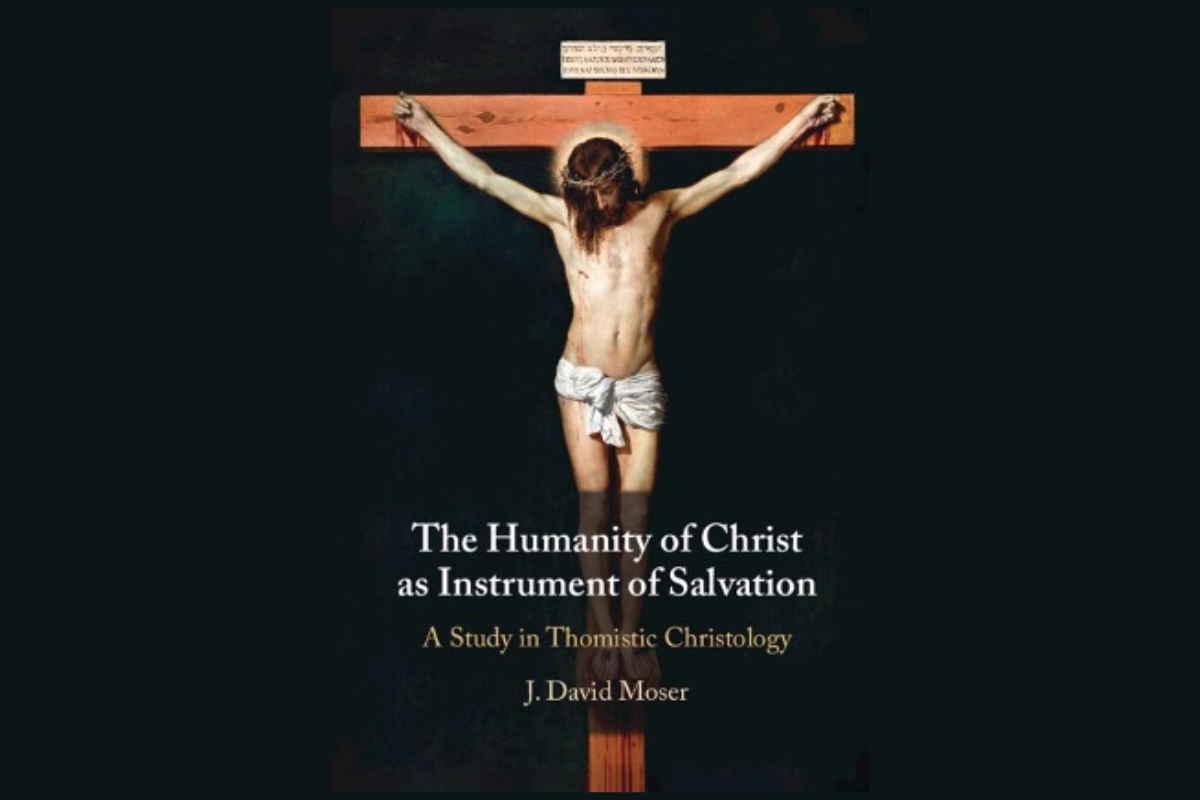
If you would like to read more about this and related ideas, check out my book The Humanity of Christ as Instrument of Salvation: A Study in Thomistic Christology (2025) from Cambridge University Press.